
Essential Oil - Allspice
Discover the warming benefits of Allspice essential oil, renowned for supporting digestion, easing muscle discomfort, and promoting overall wellness.
ESSENTIAL OIL
7/4/20262 min read
Essential Oil – Allspice
Botanical Information
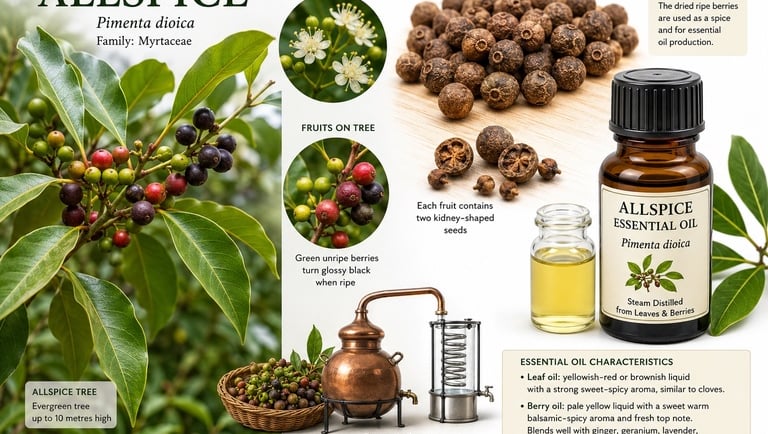
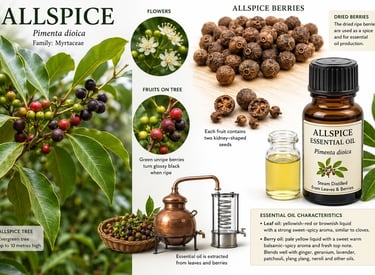
Allspice (Pimenta dioica) belongs to the Myrtaceae family and is an evergreen tree that can grow up to 10 metres in height. The tree begins bearing fruit around its third year of growth. Each fruit contains two kidney-shaped green seeds that gradually turn glossy black when fully ripe. It is also known by several other names, including Pimenta officinalis, pimento, pimenta, and Jamaica pepper.
Distribution and Traditional Uses
Allspice is native to the West Indies and South America and is widely cultivated in Jamaica, Cuba, and parts of Central America. The harvested berries are commonly exported to Europe and North America for essential oil production. Several related pimento species also grow in Venezuela, Guyana, and the West Indies, where they are traditionally used as culinary spices.
Traditionally, allspice has been valued for relieving digestive problems such as flatulence and indigestion. It has also been applied externally to ease neuralgia and rheumatic pain. Pimento water has long been used as a medicinal carrier to help relieve dyspepsia and constipation while reducing abdominal discomfort. As a culinary spice, allspice is highly regarded because its flavour resembles a combination of cloves, juniper berries, cinnamon, and black pepper.
Essential Oil and Characteristics
Allspice essential oil is extracted through steam distillation from both the leaves and the berries. The unripe green berries contain more essential oil than ripe berries, while the fruit shell contains the highest concentration of oil. A small amount of oleoresin is also extracted from the berries.
The leaf oil is a yellowish-red to brown liquid with a strong sweet and spicy aroma similar to cloves. In contrast, the berry oil is pale yellow and has a warm, sweet, balsamic-spicy fragrance with a fresh top note. It blends well with essential oils such as ginger, geranium, lavender, opopanax, labdanum, ylang-ylang, patchouli, neroli, and other oriental or spicy oils.
Chemical Composition
The primary constituent of allspice essential oil is eugenol, which is present in concentrations of approximately 60–80% in the berries and up to 96% in the leaves. Other important chemical components include methyl eugenol, cineole, phellandrene, caryophyllene, and several other naturally occurring compounds that contribute to its aroma and therapeutic properties.
Therapeutic Benefits
Allspice essential oil possesses numerous therapeutic properties, including anaesthetic, analgesic, antioxidant, antiseptic, carminative, muscle relaxant, rubefacient, stimulant, and tonic effects. In aromatherapy, it is commonly used to help improve circulation, relieve arthritis, muscle cramps, rheumatism, stiffness, and fatigue. It may also provide support for respiratory conditions such as chills, bronchitis, and congested coughs. For the digestive system, the oil is used to ease cramps, flatulence, indigestion, and nausea. Additionally, it may help reduce stress, nervous exhaustion, neuralgia, depression, and emotional tension.
Safety and Precautions
The major constituent, eugenol, may irritate the skin and mucous membranes if used improperly. Therefore, both leaf and berry essential oils should only be applied in low dilutions and with caution to minimise the risk of skin irritation.
Industrial Uses
Allspice essential oil is widely used in the pharmaceutical, cosmetic, fragrance, and food industries. It serves as an ingredient in aromatic carminative medicines and is commonly incorporated into soaps, aftershaves, perfumes, and oriental fragrances. Both the leaf and berry oils are also extensively used as flavouring agents in savoury foods, frozen products, alcoholic beverages, and soft drinks.